What does a firm become when AI agents do the work?
Abstract
Companies are starting to hand real work to AI agents: software that plans, uses tools and acts on its own, first alongside people and, in a few places, in their place. Almost everything we know about organising work assumes the workers are human. My PhD asks how much of that knowledge survives when they are not.
I study organisations whose members are partly or entirely AI agents, from a person supervising a handful of agents to a firm with no human staff at all, and test whether the classic findings of organisation theory still hold for them. The work is at an early stage: the first studies are being built, and nothing has been published yet.
Firms are starting to be built out of agents
In 2023 a team at Stanford put 25 AI agents in a small virtual town and watched them organise a Valentine's Day party. Since then researchers have run a society of 100 agents through ten simulated years, staffed a software company with agents in the roles of CEO, programmer and tester, and simulated a whole holacracy.
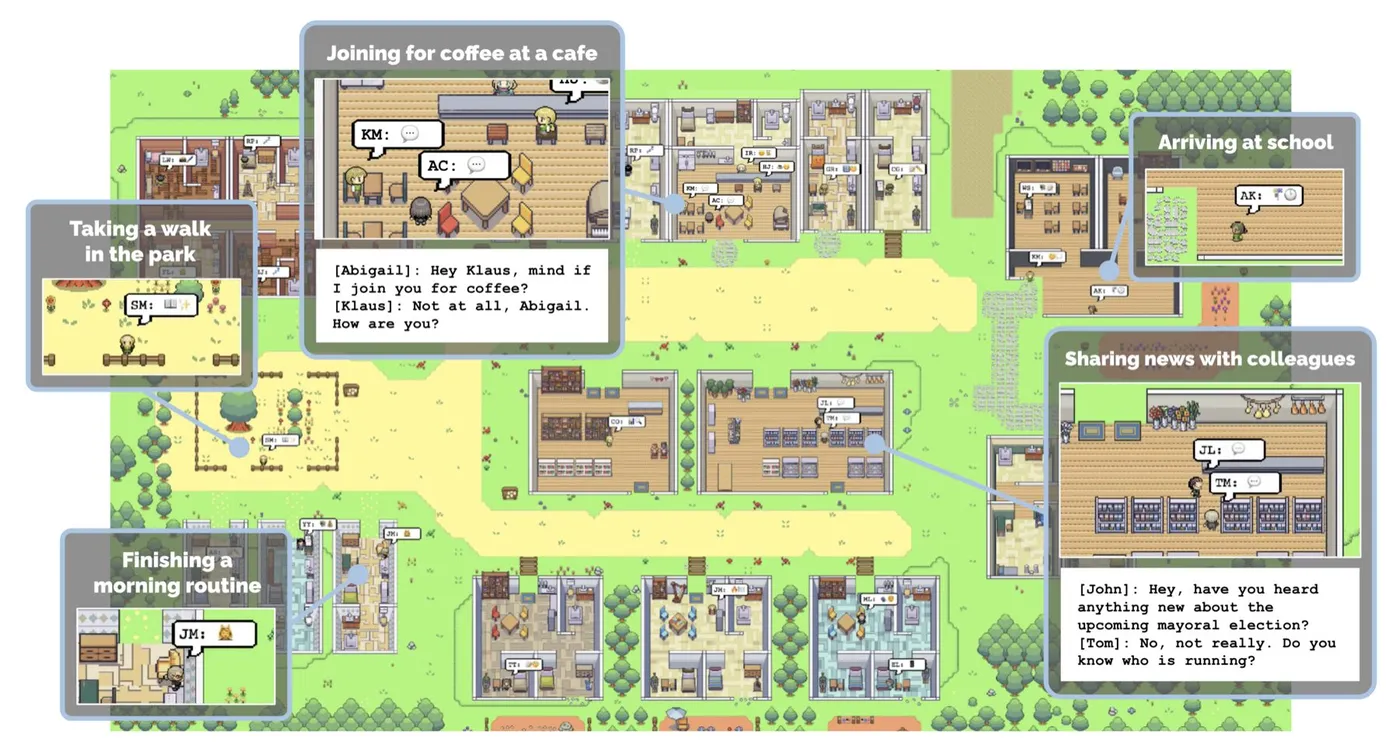
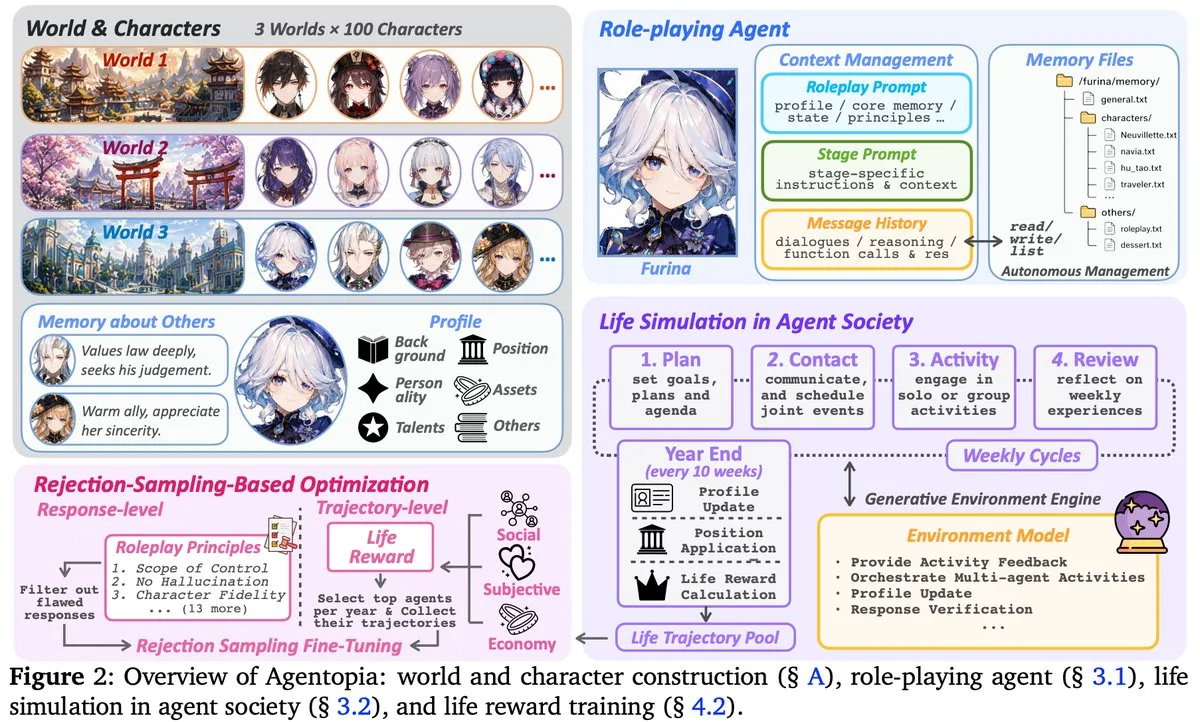


Outside the lab, the same building blocks are arriving in ordinary companies. Two professors at St. Gallen, Oliver Gassmann and Joakim Wincent, call the result the agentic enterprise: an organisation in which agents handle a growing share of the decisions and the operations, with people directing, checking and sometimes stepping back.
The technical side of this shift is well covered. The organisational side is much less so. When the members of a team are agents, or a mix of agents and people, how should the work be divided, who checks whom, and what happens when something quietly goes wrong?
A century of theory, written for people
Organisation theory has a hundred years of answers to those questions: how to divide labour, when a hierarchy beats a flat structure, how teams coordinate, how trust between colleagues forms and breaks. Every one of those answers was worked out on people, and people come with properties the theory quietly relies on. They tire, forget, disagree, want things, and learn from experience. An agent shares some of these properties, lacks others, and has a few of its own (it can be copied, paused, or swapped for a better model overnight).
So it is an open question which findings carry over. Some should hold, because they are about the structure of the work rather than about who does it. Others should break, and where they break is where new organisational forms will appear. Agent organisations make an unusually clean testbed for finding out: unlike a real company, a firm of agents can be reset, cloned and rerun with one thing changed.
I come at this from the management side. The aim is to understand organisations; AI agents are the material.
From a team of people to a firm of agents
I think of this as one dial: the share of the work done by agents. Turn it up from zero and the same organisation passes through four settings. A team of people. The same team with one agent in it, which is where most companies are today. One person running a fleet of agents. And, at the end, a firm made only of agents.
Everyone in the team is a person. A century of organisation theory was written here.One agent joins as a tool. Most companies are here today.One person directs a fleet of agents: what to delegate, what to check, when to stop trusting.No one inside the firm is a person. Does the structure still hold?
My interest lies in the last two settings. That is where the organisational questions get sharp: a person supervising several agents has to decide what to delegate, what to check, and when to stop trusting a colleague that never tires; a firm of agents has no one inside it to notice when its structure has stopped working. I study each in the place where it can be observed.
- One person, a fleet of agents: in the field. Follow professionals who work with a few agents day to day, and study how their trust in those agents forms, and what happens to it when an agent starts making mistakes. This is where the answers matter most for companies deploying agents now.
- A firm of agents: in simulation. Build a small working firm of agents with a real structure (roles, a hierarchy, rules about who may decide what), let it settle into a routine, then change one thing and see whether the organisation notices and adapts, or carries on as if nothing had happened. Because the whole firm can be copied before the change, it serves as its own control.
Where it stands
I started the PhD in June 2026. The first year goes to building the instruments and running the first studies; the results, and the papers, come after that. I would rather this page under-promised: the claims worth making are the ones that survive an experiment, and none has been run yet.
Either outcome is useful. If the classic findings hold for agents, organisations inherit a century of design knowledge they can apply to their agent fleets. If they do not, we will have found the places where the agentic enterprise needs a theory of its own.