Embracing the Gale: The Evolution and Impact of Wind Energy
Contents
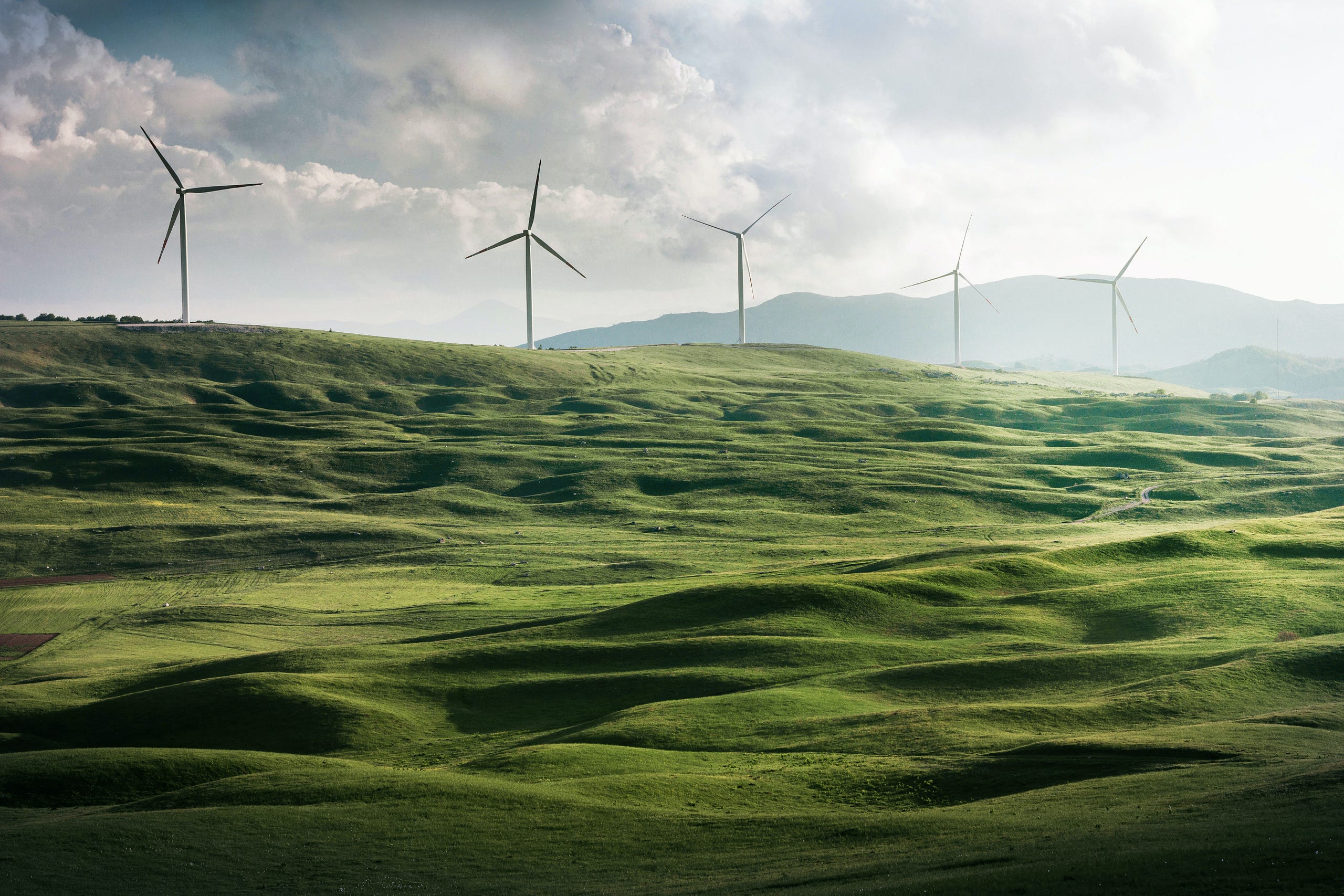 Photo by Appolinary Kalashnikova on Unsplash
This article was written for the Comprendre newsletter: subscribe to get the next article and more!
In recent years, wind turbines have become an increasingly common sight, especially in countries actively transitioning away from fossil fuels. Since 2009, global onshore wind capacity has quadrupled, reaching over 835 gigawatts globally in 2022. This surge reflects a concerted effort to combat global warming by embracing greener energy sources.
However, wind energy is not without its critics. Concerns range from aesthetic impacts on landscapes to potential ecological disruptions caused by noise and shadow flickers. Additionally, the high demand for metals and the challenges of recycling turbine blades have sparked debates about the sustainability of this technology.
Despite these concerns, wind turbines have gained widespread acceptance as a key component of a more sustainable future. To fully appreciate their role, we need to delve into their workings, requirements, grid integration, and future prospects.
Let’s unravel together the mystery of those giant transforming breezes into electricity, so that we can better understand what lies into our future!
How does it work?
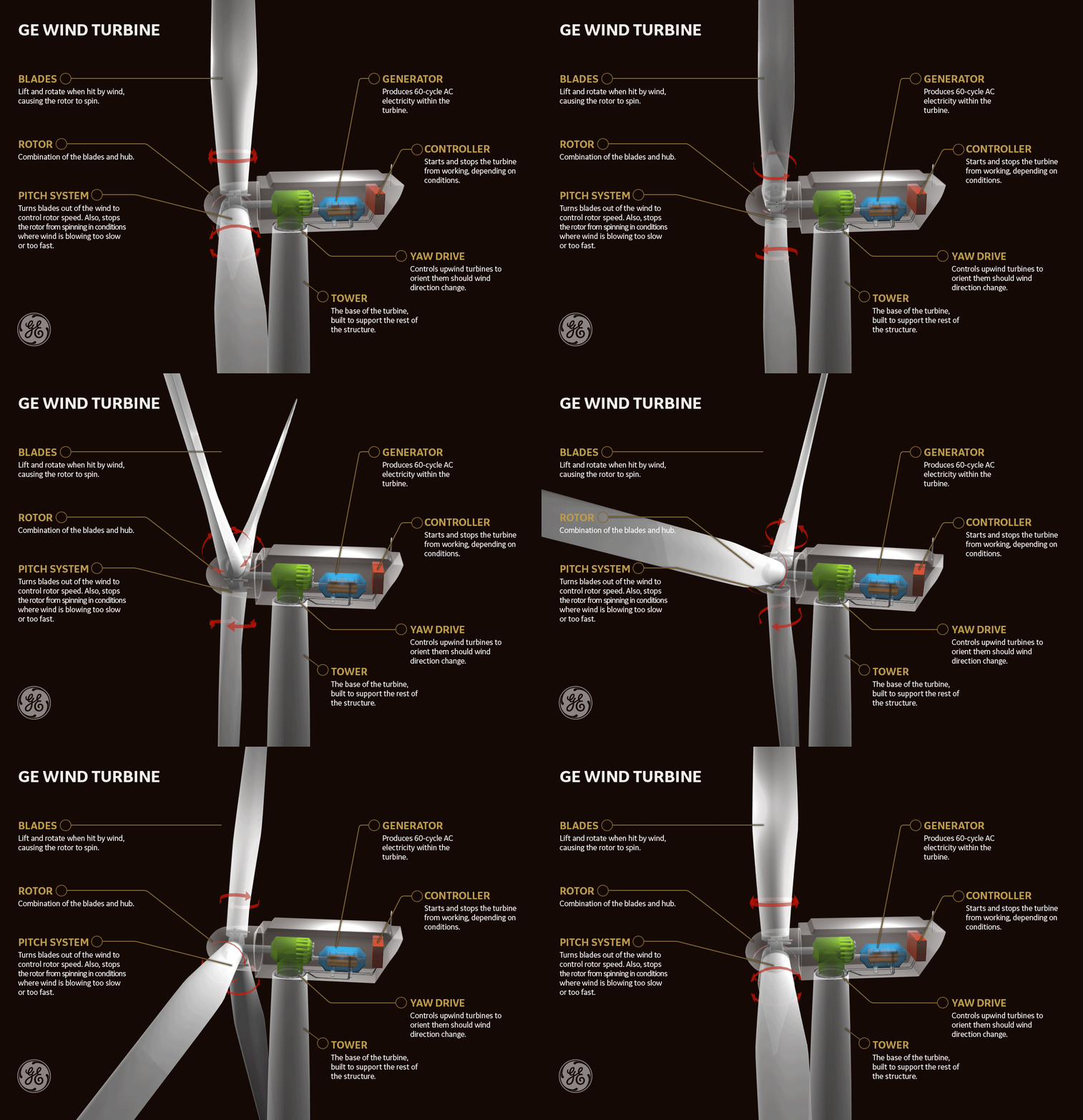
Wind turbines operate on a simple yet sophisticated principle. When the wind blows, it pushes against the blades of the turbine, causing them to rotate. This rotation turns a shaft connected to a generator, which then converts the mechanical energy into electricity.
In term of energy, a wind turbine harvest the kinetic energy of the wind — meaning, it’s motion — to transform it into electrical energy. It does this transformation using a generator, a sort of motor transforming motion into an electromagnetic field, then transformed into electric current.
Its history
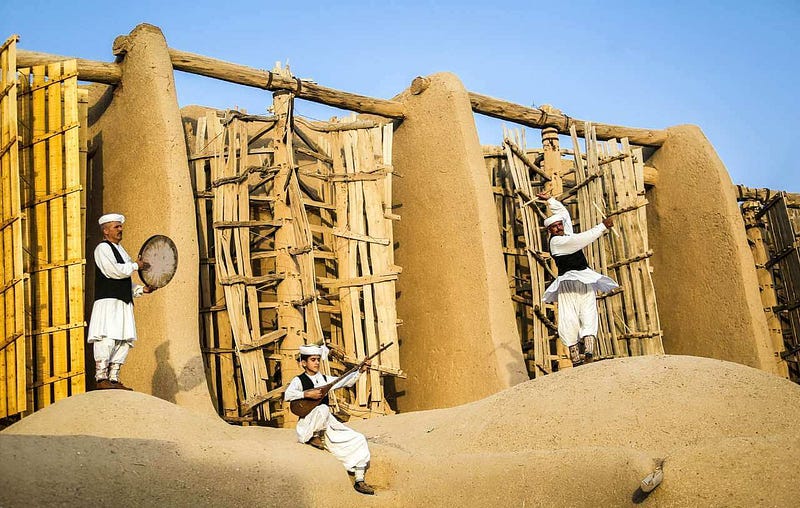 Asbads in current Iran
Although the electricity producing wind turbine are quite modern, the first one dating back to 1833, the principal of using the wind motion as a source of power can be traced all the way to the 1st century and a man called Hero of Alexandria. Hero conceptualized a machine harnessing the wind to power an organ.
The first practical user of windmill though would to be the farmers of Sistan — a province of old Persia, current south-eastern Iran — during the 7th century. They built and used a “Asbads” to grind grain and draw up water. A few centuries later, their machine would come to Europe during medieval time and get transformed by local inventor to ease farmers life.
Later, the industrial era and its fabulous inventors, passionate about this new “electricity”, turned the windmill of Europe into electricity producer. Wind turbine would then evolve during 200 years before becoming what we know them to be today.
What does it require?
The need for… wind!
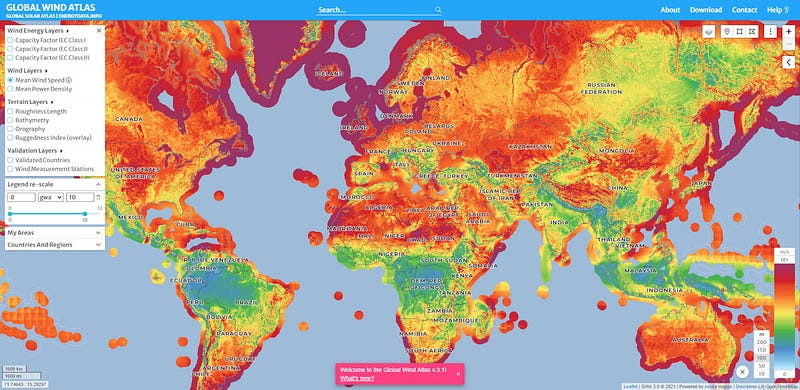 Wind map from the Global Wind Atlas
Do not think too hard about what wind turbine requires, as the answer is very straightforward: it needs wind.
However, although the answer is simple, the implications are not. You need consistant and strong wind to move those giant of carbon. Winds that are not available all around the globe as you can see on the atlas of wind’s map.
The fact that it needs to get exposed to wind also means turbine needs to be build in very open spaces or on high ground, so fields or mountains. Thankfully, a single windmill do not block a important ground space, as the tower is pretty thin. However, to produce impactful amount of electricity you need more than one turbine, and they cannot be too close to each other, wind turbines therefore requires kilometers of space.
This last point is especially interesting: why can’t we build wind turbine too close to each other? Well, it’s all in the title! Wind turbine harness the energy from the wind, worded differently, they take this energy and transform it, and the energy is now gone. Remember what we said earlier, the wind energy is actually the wind motion, it being gone then means the wind motion after getting through the turbine is greatly reduced. The wind speed can still be rebuilt, but if you put the turbines too close to each other, the wind won’t have enough time to get back to full speed and therefore the second windmill won’t run as efficiently.
The reliance on minerals
Before using them, you also need to build those big white towers, a process a bit more complex than building lego. Wind turbines indeed require an important variety of materials. Crushed stone to make concrete, Bauxite for aluminum, Clay, Sand and Gypsum for Cement, Cobalt and some more rare earth oxide for the battery and the generator, Copper for the wiring, Iron and Coal to make steel, fiber glass and plastic for the blade… The list is long, and greatly evolving as turbine are getting new innovation every now and then.
Do not think that this material variety means lesser volume. Indeed, in comparaison to all the other energy sources, both renewable like wind or Nuclear, or even fossil energy like Coal or Gas, Wind energy is estimated to be the highest consumers of minerals. Offshore wind installation would use 3 times as much mineral as a coal plant, per unit of energy produced. This isn’t something to take lightly when the future of the mining industry is questionnable.
The adaptation of the electrical grid
Wind energy, like all sources of renewable energy, faces challenges of intermittency, as wind speeds can fluctuate dramatically. This unpredictability poses difficulties for energy grid management, necessitating the development of efficient storage solutions and grid balancing technologies. Balancing supply and demand on the grid become an increasingly complex task with high levels of wind energy penetration.
How much energy does it produce?
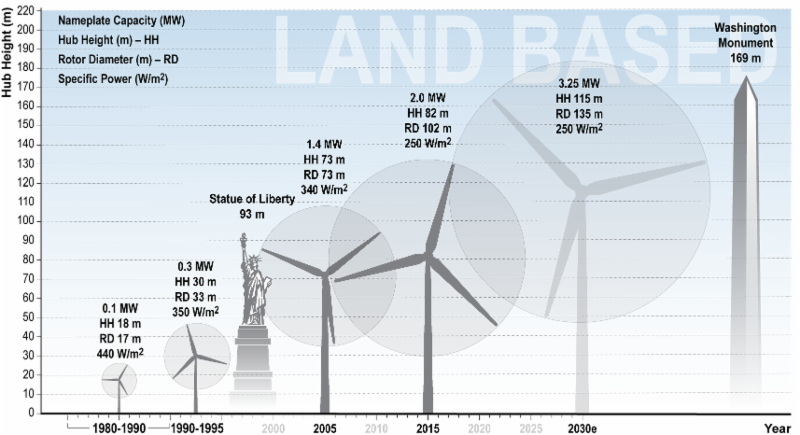 Comparaison of different Wind turbine size, Berkeley Lab et al.
An average onshore wind turbine with a capacity of 2.5–3.0 MW can produce more than 6 million kWh in a year — enough to supply 1,500 average EU households with electricity. Offshore wind turbines, being larger and exposed to higher wind speeds, can produce much more, with the largest ones generating enough electricity to power 16,000 European households.
In comparaison, a average nuclear power plant produced 1,000 MWh. A quick calculus would therefore indicate that you would need more than 300 wind turbines to replace one nuclear power plant, although the real calculus isn’t as simple as wind energy is intermittent, and you would therefore require even more turbine to match a nuclear unit.
What is the future prospect?
Policies pushing for more.
Governments around the world are drafting policies and regulations to encourage the growth and development of wind energy. These policies often include financial incentives, such as tax credits or subsidies, to make wind energy more competitive with traditional energy sources.
The wind turbines of tomorrow
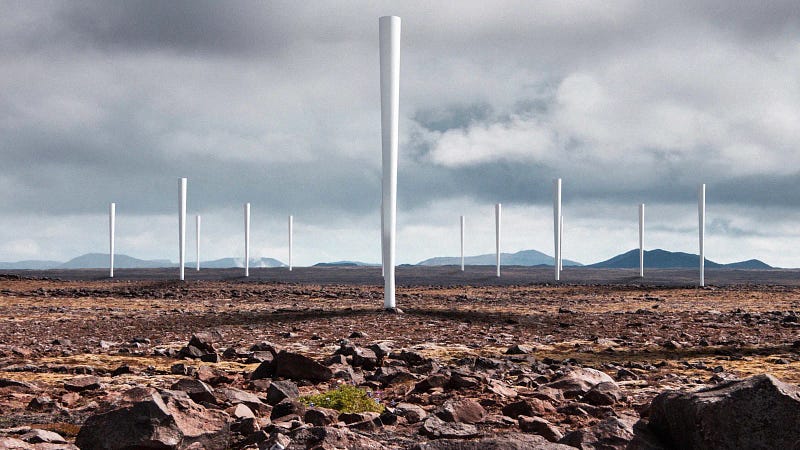 Bladeless wind turbine design from Vortex
You probably understood it quite quickly: the more wind motion you are able to ‘capture’, the more energy you are able to transform. This simple analysis led engineer to develop windmill with bigger blade and higher tower, as the bigger blade would be more exposition to the wind, and higher tower would mean exposition to more consistent motion.
The future of wind turbine might then lie in their size. Enormous turbines are coming to life in the Netherland or China, with blades 126 meters long. Those towers are able to produce up to 380MWh, enough to power about 170,000 houses. Again, for comparaison, an average nuclear power plant produces 1,000MWh.
Going bigger however, isn’t the only solution, and some companies are working on developing turbine with different designs, capable of adapting to urban places or transforming wind with low amount of energy.
This article was written for the Comprendre newsletter: subscribe to get the next article and more!